

& We’ll get a budget out within 24 hours
Fill out the form below and we'll get back to you as soon as possible.

We'd love to hear from you. Reach out to us through any of the following channels.

MASTERY FILMS – FILM PRODUCTION COMPANY
Congratulations! Your shoot’s been confirmed for Thailand! You have your script, storyboards, timeline, and location suggestions and recommendations by your Thailand Film Production Company have been sifted through. What’s the first thing you need to do after this to get the film production services express out of the station? Get a Thailand Film Permit!
So first and foremost, what the film permit does for you, is it allows you to legally shoot in the Kingdom of Thailand. The film permit will be issued by the Thailand Film Office which is a sub-department under the Ministry of Tourism. All foreign filmmakers must have a film permit to shoot in the Kingdom of Thailand legally.
You’ll also be able to obtain work permits for all the foreign crew who have travelled to Thailand for the shoot as well as apply for any other permits you need from other relevant authorities such as the Department of National Parks, and the Fine Arts Department. This might sound a bit overwhelming but with the right Film Production Company by your side, it is a rather transparent step-by-step process to navigate. Our producers at Mastery Films have over 10 years of experience getting film permits approved for all types of shoots. Whether it be your latest commercial, music video, TV series, feature film, corporate video, or any other type of shoot, we got you!
Without the Thailand film permit, your crew and cast from abroad won't be able to legally film or work in Thailand, until your script has been approved by the relevant authorities at the Thailand Film Office under the tourism board.
Once you have all the completed information for the shoot, it will take between 3–10 business days for the permit to be approved. For a general timeline, here are a list of timelines to keep in mind for the different types of content you would like to shoot:
3 business days processing after documents are approved to present to the Digital Media Committee for review:
5–10 business days processing after documents are approved to present to the Digital Media Committee for review:
Please keep in mind that the official timeline doesn't start until all your correct documents have been submitted. The speed at which the Thailand Film Office issues your permits can also be affected by the number of films being submitted for shoot by other companies as well. During peak shoot season, this can create slight delays. If the Film Office has any questions about the contents of your shoot, or if the documents you sent over are incomplete, the Thailand Film Office will send the material back for revisions until it passes the official review.
For more information on this, you can check out the Thailand Film Office's website directly on this topic.
Obtaining a film permit also allows you to receive other permits you need that rely on your shoot obtaining a film permit first.
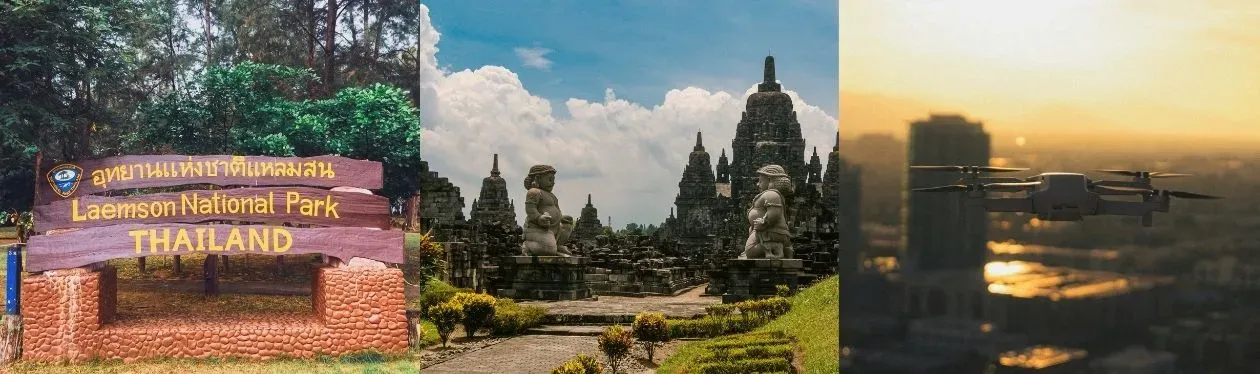
Thailand National Park Permits
As an example, if you want to shoot in Khao Yai National Park, the production will need to get permission to film there from the Department of National Parks will only happen once the Thailand Film Office issues the Film Permit for the shoot in Thailand.
Thailand Historical Sites Permits
If you want to film at a historical site such as the ancient ruins in Sukhothai province, you’ll need to receive permission from the Fine Arts Department, you’ve guessed it, once you have your film permit.
Permission to film in National Parks or in Historical Sites can take an exceptionally long time for approvals. It also depends which national parks, which historical site, and how large of a footprint your crew will have on the location that determines how long the approval process with these locations will take. Allow for at least 1.5–2 weeks of additional time for these approvals is advised.
If you’d like more information on getting permits for National Parks and Historical Sites, please visit the websites of the National Parks and the Historical Sites.
Thailand Drone Permits
Thailand, like most countries, has quite stringent rules when it comes to drone permits. Apart from the usual regulations for total restrictions in areas near airports, important government buildings such as the royal palace and parliament building, you will also need to get permission from the Civil Aviation Authority and other government agencies depending on the exact shooting location. You can read more about Thailand drone permits on the NBTC website.
View the table of contents below:
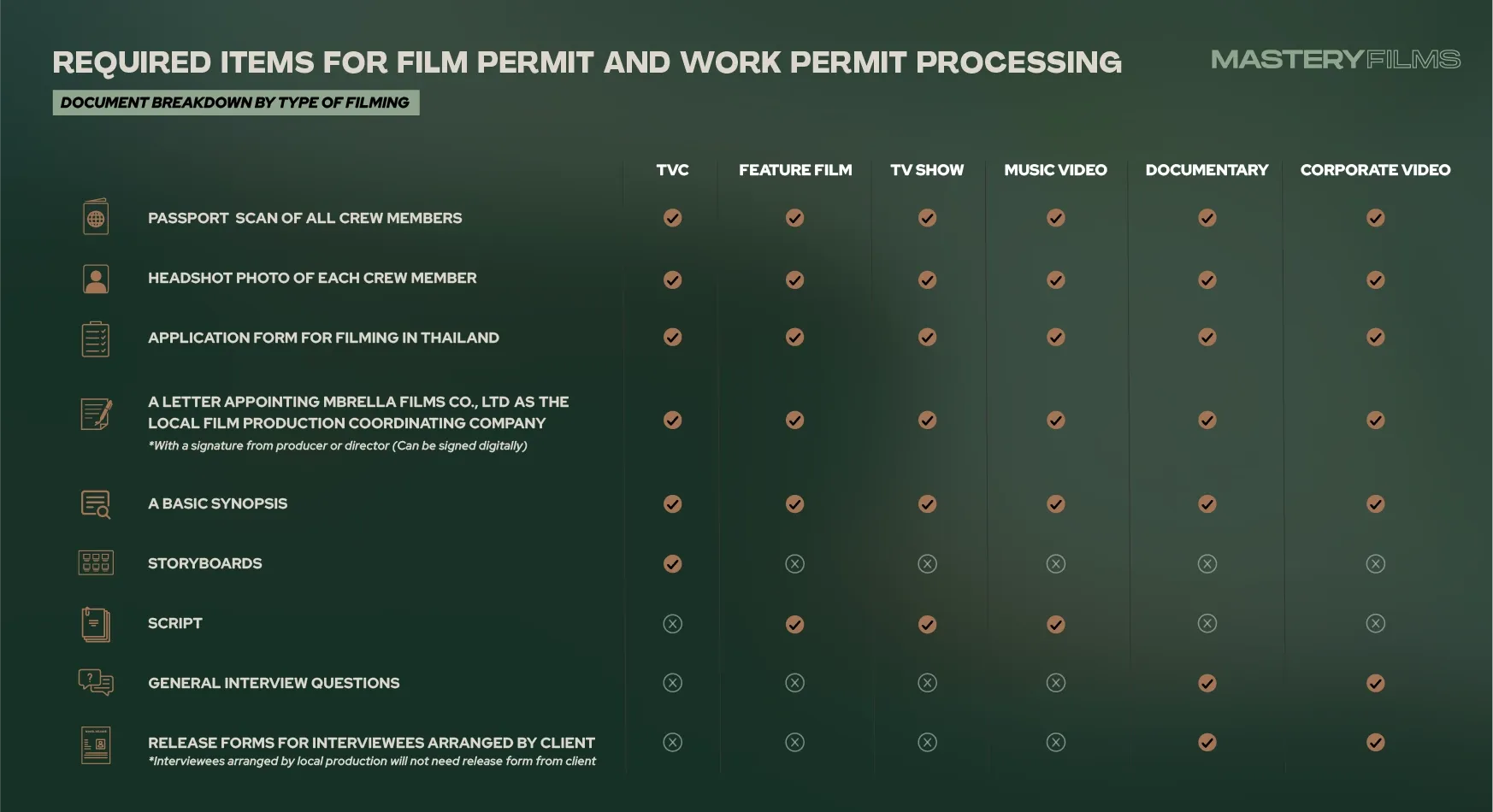
Whether it be the script of your film or TV Series, the storyboard of your commercial, or the synopsis of your documentary, it’s imperative that the major aspects of your shoot are solidified so as to not disrupt the flow of the film production services too abruptly. This is because if there are any major changes, the Thailand film production company will need to inform the Film Office in advance, and it will need to be reviewed once more by the Film Office's Digital Media Committee.
Don’t get me wrong, changes to your storyline or shoot are definitely possible both in prep and shoot, but if it’s a major change that needs to go through committee review, you will need around 5–7 days or more for the changes to be officially approved. So make sure you plan accordingly.
This isn't talking about minor changes to your shoot which can be discussed and given approval from by the Film Officer who's going to be on-set if they deem it to be an acceptable change. For example, if you have a scene where in the original script people are playing snooker, but instead on the day of, the director wants the actors to be playing Ping-Pong, these are the sort of things that can definitely be discussed and approved from by the Film Officer on-set so long as there's no safety concerns or if it doesn't change the overall content of the shoot.
But if you're changing things drastically, for example, if you have a commercial where your storyboard indicates your lead talents playing snooker, but then all of a sudden your director want them to drag race instead, 2 days before filming, that would be considered a drastic change that you will probably require the film office to re-approve your permit in Committee and could easily cause delays to your shoot. So, lock in your shooting content, your script or your storyboard beforehand as much as possible.
It’s important to understand this concept: When it comes to the location of your shoot, Thailand Film Permits are issued on the basis of the province you are shooting in. The Thailand Film Office will need to assign a Film Officer to your shoot, and the personnel will be assigned according to the province you are shooting in. Changes to shooting provinces means the Thailand Film Office needs to coordinate internally, cancel your existing shooting plans, and find you a new film officer in the new province you are shooting in.
These changes do not need to go through the Film Office’s Digital Media Committee, but your Film Permit and the details of the shooting do need to be reissued by the Director of the Thailand Film Office. Let me give you an example of this:
If, for example, you're originally planning to shoot in a house in Bangkok, but two days before the shoot, the director wants to possibly change the shooting location to another house in Bangkok, there is a definite possibility you will be able to discuss this with the film officer and Thailand Film Office to receive permission to change the shooting location.
But if, for example, you want to change from shooting from a house in Bangkok to shooting in a house by the beach in Phuket province two days before the actual shooting date, that might be an issue.
An official written request for changing shooting locations and provinces will most definitely be required. The Thailand Film Office will most likely need to reassign a new Film Officer for your shoot in the new province. This could take at least a few days. To make life easier for everyone involved try to get all your locations locked and sorted beforehand.
There actually is not a direct cost from the Thailand Film Office for processing the film permit. However, your local coordinator, the Thailand Film Production Company, will be using crew i.e. a film permit coordinator and will most likely be charging you for time spent preparing all the necessary documents, translations, submission, revisions, transportation and delivery fees, etc.
The only direct cost is you will have to pay 2,000 Thai Baht per day for the assigned Officer on your shoot days. This will be a person that has been assigned by the Thailand Film Office to monitor the shoot. This is a mandatory requirement by the Film Office. According to the Film Office’s rules, the Filmboard Officer’s transportation, food costs as well as any possible accommodation costs if the Filmboard Officer might require, will also need to be covered by the production. For the most part, there’s not much to worry about with the Film Officer assigned to your set. They’re actually quite nice and can be very helpful.
There are two different work permits routes that you can take once you obtain your film permit, and it depends on the duration of your shoot.
1. A WP.34 Application
This is an emergency work permit that can be issued to the foreign crew who come to Thailand for the shoot. This type of work permit can be applied for by the Production House in Thailand issued by the Labor Department on the basis of having a Film Permit to perform what is deemed urgent or necessary work for a period not longer than 15 days.
This type of work permit is, for example, if you have a commercial shoot for three days and the director and the team are coming in a day or two before the shoot. These people can come into Thailand on whatever visa that they have, whether it be visa-free, a tourist visa, it’s OK. Your local production coordinator can submit their application along with the necessary documents for them to have work permits for the duration of their shoot days.
However, if you're shooting for more than 15 days, you need to make plans to get visas, and work permits for your crew in advance.
2. Non-M Visas
If your shoot is for an extended duration, that usually includes getting long-term visas and work permits for your crew and cast from abroad. Usually, It’ll be what is called a ‘Non-M Visa’ for your crew and cast. This can be done once the Film Office issues the relevant documents to the embassy and labour department for processing.
As a top film production company in Thailand, our team at Mastery Films aims to make your next Thailand video production as memorable and successful as you envision.
If you have queries about an impending shoot, require details on permits or need info on Thailand Visas and Work Permits for Film Production, we can help.
Incentives and Legal

Productions
Services
Services
Services
Services
Services
Filming Locations

Productions
Productions