
& We’ll get a budget out within 24 hours
Fill out the form below and we'll get back to you as soon as possible.

We'd love to hear from you. Reach out to us through any of the following channels.

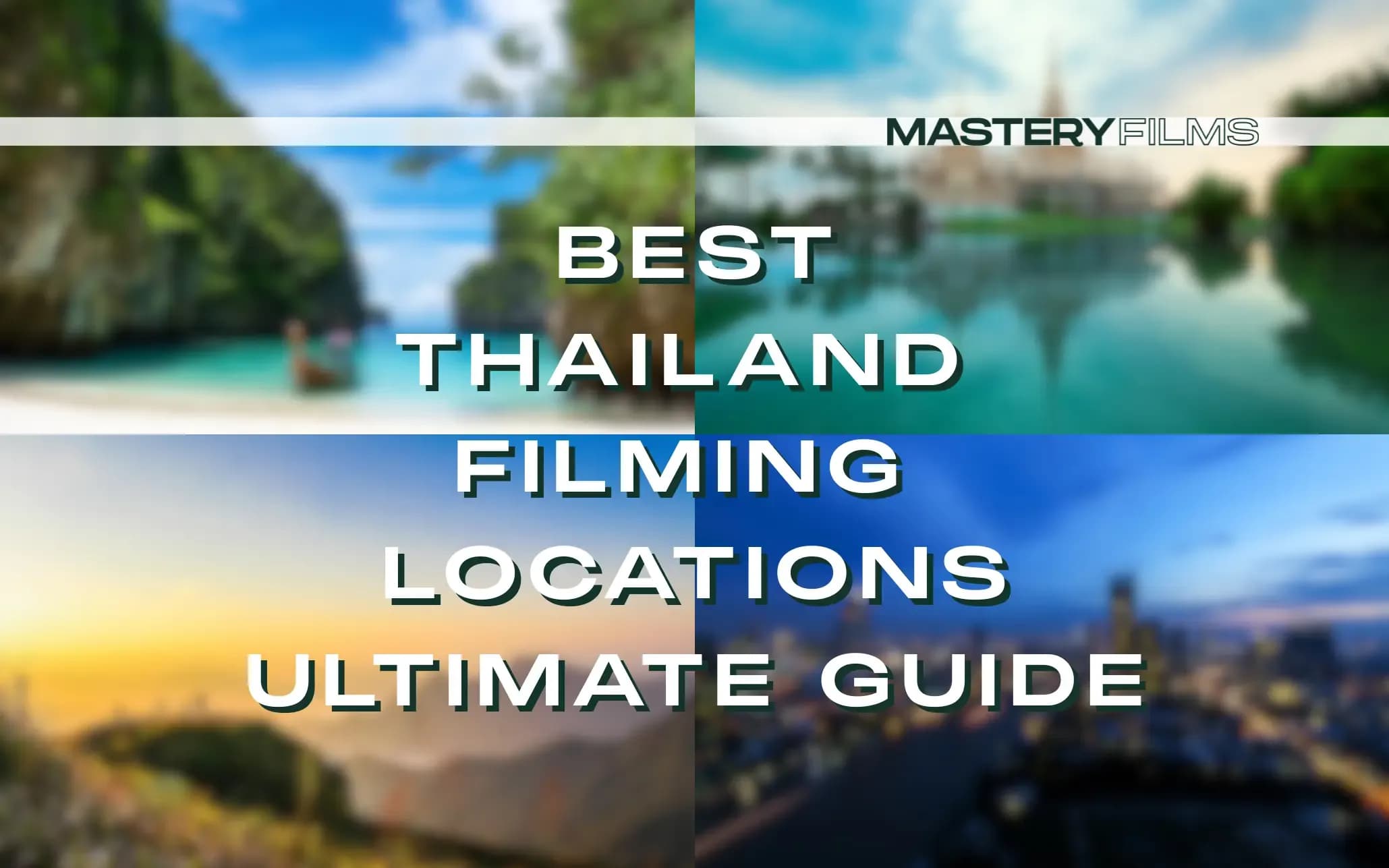
Thailand is more than just a travel destination, it is one of the world’s most popular filming locations. From Hollywood blockbusters and Netflix originals to Korean dramas and global commercials, productions continue to choose filming in Thailand for its variety, cultural depth, and cinematic appeal.
This guide explores 25 of Thailand’s most iconic filming locations, with insights into their history and on-screen appearances. Whether you’re a filmmaker searching for the perfect setting or a traveler wanting to visit famous movie spots, this is your essential guide to filming in the Land of Smiles.
| Location | Region | Films/ TV Series |
|---|---|---|
| Khao San Road | Bangkok | The Beach, Hangover II |
| Soi Cowboy | Bangkok | Bridget Jones 2, Hangover II |
| Patpong | Bangkok | The Deer Hunter, The Killing Fields |
| Lebua Sky Bar | Bangkok | Hangover II |
| Mandarin Oriental | Bangkok | Man with the Golden Gun, Love in the Big City |
| ICONSIAM | Bangkok | King the Land |
| Yaowarat | Bangkok | Street Fighter, Only God Forgives |
| Wat Arun | Bangkok | Mortal Kombat, King the Land |
| James Bond Island | Phang Nga | Golden Gun, Star Wars III, F9 |
| Maya Bay | Phi Phi | The Beach |
| Phuket Old Town | Phuket | The Beach |
| Naiyang Beach | Phuket | Bridget Jones 2 |
| Krabi Province | Krabi | Mortal Kombat, F9, Jurassic World |
| Khao Lak Resort | Phang Nga | The Impossible |
| Baan Chinpracha | Phuket | Heaven and Earth |
| Four Seasons Samui | Koh Samui | White Lotus |
| River Kwai Bridge | Kanchanaburi | The Railway Man |
| Wat Phra Si Sanphet | Ayutthaya | Mortal Kombat II, Suriyothai |
| Khao Yai Park | Nakhon Ratchasima | The Beach, Hangover II |
| Wat Tak Pha | Lamphun | The King and I, Rambo III |
| Warorot Market | Chiang Mai | American Gangster, Ong-Bak |
| Mae Ping River | Chiang Mai | American Gangster, Rambo III |
| Mae Ping Hotel | Chiang Mai | No Escape |
| Doi Suthep | Chiang Mai | Rambo III |
| Sri Lanna Park | Chiang Mai | Rambo (2008) |
Khao San Road Films: The Beach (2000), The Hangover Part II (2011) Khao San Road has long been the beating heart of backpacker culture, a chaotic but intoxicating mix of neon lights, crowded hostels, sizzling food carts, and global travelers. Danny Boyle chose it in The Beach (2000) as the perfect introduction to Leonardo DiCaprio’s journey, capturing the overwhelming thrill of arriving in Thailand, while The Hangover Part II (2011) used it as a backdrop for wild nocturnal escapades. Its appeal for filmmakers lies in its authenticity, the kind of location where chaos, music, and nightlife naturally spill into the camera frame. Visitors can feel this same cinematic rush by arriving at dusk, when the street comes alive in a blur of light, sound, and color.
Soi Cowboy Films: Bridget Jones: The Edge of Reason (2004), The Hangover Part II (2011) Soi Cowboy, only 150 meters long, glows brighter than almost any other street in Bangkok thanks to its rows of neon signs, bars, and music venues. It featured in Bridget Jones: The Edge of Reason (2004) and again in The Hangover Part II (2011), cementing its place as one of the most recognizable images of Bangkok’s nightlife. Directors love it because it is both compact and intense, every frame bursting with saturated color. For visitors, walking through Soi Cowboy feels like stepping into a movie scene, where reality blurs with performance under the neon glow.
Patpong Films: The Deer Hunter (1978), The Killing Fields (1984) Patpong is one of Bangkok’s most storied districts, famous for its night market and entertainment venues, and it has long served as a cinematic shorthand for the city’s gritty nightlife. Classics like The Deer Hunter (1978) and The Killing Fields (1984) filmed here, using its crowded streets and smoky interiors to evoke the chaos of Southeast Asia in the 1970s. Today, Patpong remains lively, blending its tourist-oriented stalls with remnants of its notorious past. Directors continue to value its authenticity, while travelers find it a living piece of film and cultural history.
Lebua Sky Bar & State Tower Film: The Hangover Part II (2011) Lebua’s Sky Bar, soaring above the city on the 63rd floor of the State Tower, became an international icon after its starring role in The Hangover Part II (2011). The sweeping 360-degree views of the Chao Phraya River and glittering skyline provide an unforgettable cinematic backdrop. Directors are drawn here because it symbolizes ambition, luxury, and the electrifying energy of Bangkok at night. Visitors who arrive before sunset can experience the same breathtaking transformation captured on film, watching the city fade from golden light into a sparkling ocean of skyscrapers.
Mandarin Oriental Bangkok Films: The Man with the Golden Gun (1974), Love in the Big City (2024 K-drama) More than just a luxury hotel, the Mandarin Oriental is a living legend along the Chao Phraya River. It first appeared in The Man with the Golden Gun (1974), where James Bond encountered intrigue and elegance, and returned in the 2024 K-drama Love in the Big City. Its colonial architecture, polished teak interiors, and lush riverside gardens make it a director’s dream when sophistication is required. Even travelers who don’t stay here can admire its historic facade from a ferry ride, a view that has graced screens for nearly five decades.
ICONSIAM Film: King the Land (2023) Bangkok’s ultra-modern megamall, ICONSIAM, represents the city’s cosmopolitan future and appeared in King the Land (2023) as a symbol of luxury and modern romance. With its gleaming glass terraces and riverside location, it offers filmmakers sleek backdrops that contrast sharply with temples and traditional markets. Its design, with reflective surfaces and open decks, feels almost built for wide-angle cinematography. Visitors can experience the same futuristic elegance simply by walking its terraces and watching the Chao Phraya flow below.
Yaowarat (Chinatown) Films: Street Fighter (1994), Only God Forgives (2013) Bangkok’s Chinatown, centered on Yaowarat Road, is a neon-lit maze of street food, gold shops, and lantern-hung alleyways that has fascinated directors for decades. Street Fighter (1994) used its chaotic backdrop for action sequences, while Nicolas Winding Refn’s Only God Forgives (2013) tapped into its moody, neon-soaked atmosphere. For filmmakers, Yaowarat offers unparalleled visual density, every frame alive with color, sound, and movement. For visitors, eating noodles under glowing lanterns feels like starring in a scene set in a neon dreamscape.
Wat Arun (Temple of Dawn) Films: Mortal Kombat (2021), King the Land (2023) Wat Arun is one of Bangkok’s most iconic temples, its porcelain-covered spires rising elegantly from the west bank of the Chao Phraya River. It featured in Mortal Kombat (2021), where its steep staircases added drama to a fight sequence, and in King the Land (2023), where its sunset silhouette served as a romantic backdrop. Directors love it for its timeless profile, instantly recognizable to audiences worldwide. For visitors, watching the temple glow in the last light of day from across the river feels like experiencing a perfectly framed closing shot.
James Bond Island (Phang Nga Bay) Films: The Man with the Golden Gun (1974), Star Wars: Episode III (2005), F9 (2021) Khao Phing Kan, forever nicknamed “James Bond Island,” shot to fame in The Man with the Golden Gun (1974), where Scaramanga’s lair was hidden among its limestone cliffs. The dramatic rock formations of Phang Nga Bay have since appeared in Star Wars: Episode III – Revenge of the Sith (2005) and Fast & Furious 9 (2021), proving their versatility for both science fiction and high-octane action. The towering limestone pillars rising from emerald water create natural grandeur that needs no cinematic enhancement. Visitors today can tour the bay by long-tail boat and stand where Bond once walked, framed by one of cinema’s most famous skylines.
Maya Bay, Ko Phi Phi Lee Film: The Beach (2000) Maya Bay, immortalized in The Beach (2000), became one of the world’s most famous movie locations, drawing millions of visitors who wanted to see the secret paradise DiCaprio’s character discovered. Its sheer limestone cliffs and crystal-clear waters create a natural amphitheater that feels otherworldly, which is exactly why directors chose it. After years of over-tourism, Maya Bay has been carefully restored and is now regulated to protect its fragile coral ecosystem. Visitors can once again step into this cinematic dreamscape, though only for limited times each day, making the experience all the more precious.
Phuket Old Town & On On Hotel Film: The Beach (2000) The pastel-colored Sino-Portuguese shophouses of Phuket Old Town have stood for over a century, their arcades and facades providing an evocative backdrop for countless scenes. In The Beach (2000), the On On Hotel was used as Leonardo DiCaprio’s modest guesthouse, giving the film a sense of authenticity in portraying backpacker life. Directors are drawn to this area because it captures Thailand’s blend of Chinese and European influences in architecture and atmosphere. For travelers, walking through Old Town is like moving through a living set, where every doorway and street corner feels ready for the camera.
Naiyang Beach, Phuket Film: Bridget Jones: The Edge of Reason (2004) Naiyang Beach, located close to Phuket International Airport, may seem like an unassuming local beach, but it earned a cinematic moment in Bridget Jones: The Edge of Reason (2004). Its unspoiled charm and gentle waves make it a natural choice for directors seeking a softer, more romantic coastal setting. Unlike Phuket’s more crowded beaches, Naiyang feels laid-back and authentic, appealing to both filmmakers and travelers who want something more intimate. Walking its sands, one can almost imagine Bridget stumbling in with her suitcase, wide-eyed at the Thai seaside.
Krabi Province Films: Mortal Kombat (1995), The Beach (2000), F9 (2021), Jurassic World: Rebirth (2025) Krabi’s jungle-clad cliffs and turquoise lagoons have long captivated filmmakers, appearing in Mortal Kombat (1995), The Beach (2000), and Fast & Furious 9 (2021). Its surreal landscapes, where limestone towers rise straight from the sea, also attracted producers of Jurassic World: Rebirth (upcoming), who used it to represent prehistoric worlds. Directors love Krabi because it is endlessly cinematic, offering settings that range from hidden lagoons to wide, dramatic seascapes. Visitors exploring by kayak or boat find themselves in a natural film set where every angle could be a scene from an adventure movie.
Khao Lak Orchid Beach Resort Film: The Impossible (2012) Khao Lak Orchid Beach Resort was chosen as one of the filming locations for The Impossible (2012), a critically acclaimed drama based on the real events of the 2004 Indian Ocean tsunami. Directors valued its authentic coastal scenery, which allowed the film to convey both the beauty of Thailand and the gravity of the tragedy. Today, the resort is serene, with peaceful stretches of sand and calm waters, a stark contrast to its cinematic portrayal. For visitors, it stands as both a relaxing retreat and a reminder of resilience and recovery.
Baan Chinpracha, Phuket Town Film: Heaven and Earth (1993) Baan Chinpracha is a Sino-Portuguese mansion built in the early 20th century, complete with imported Italian tiles, antique furniture, and intricate wooden doors. It was prominently featured in Oliver Stone’s Heaven and Earth (1993), where its authenticity lent depth to the historical drama. Directors value this mansion for its ability to transport audiences back in time, showcasing the wealth and cultural blend of Phuket’s past. Today, travelers can tour the house and experience its period interiors, feeling as though they’ve stepped into a film set frozen in history.
Four Seasons Resort, Koh Samui Series: The White Lotus (Season 3) Perched on a hillside overlooking the Gulf of Thailand, the Four Seasons Koh Samui became globally recognized through Season 3 of HBO’s The White Lotus. Its luxurious villas and infinity pools provided the perfect setting for a darkly comedic exploration of privilege and desire. Directors love it because the setting itself tells a story: tropical beauty layered with exclusivity and indulgence. For visitors, sunsets here rival anything seen on screen, proving that some cinematic experiences are best lived in person.
Bridge on the River Kwai, Kanchanaburi Film: The Railway Man (2013) The iron bridge at Kanchanaburi, built during World War II by Allied prisoners of war, is both a site of remembrance and a cinematic landmark. It appeared in The Railway Man (2013), a drama based on true stories of survivors. Directors are drawn to the bridge because it carries inherent dramatic weight, needing no embellishment to convey sacrifice and resilience. Visitors walking across it today feel both the gravity of history and the thrill of stepping into a story that has been retold through both cinema and memory.
Wat Phra Si Sanphet, Ayutthaya Films: Mortal Kombat: Annihilation (1997), The Legend of Suriyothai (2001) The ruined grandeur of Ayutthaya’s former royal temple has made Wat Phra Si Sanphet a powerful backdrop for films such as Mortal Kombat: Annihilation (1997) and Thailand’s own The Legend of Suriyothai (2001). Its rows of towering stupas, weathered by centuries, create a cinematic tableau of ancient glory and faded power. Directors use it to suggest timelessness and drama, a place where past and present converge. For visitors, cycling through the ruins and standing among its brick towers feels like moving through a film set where history itself plays the leading role.
Khao Yai National Park Films: The Beach (2000), The Hangover Part II (2011), A Little Thing Called Love (2010) Thailand’s first national park, Khao Yai, has played host to everything from The Beach (2000) to The Hangover Part II (2011) and the Thai romance A Little Thing Called Love (2010). Its waterfalls, especially Haew Suwat, and its jungle trails make it a director’s dream for both adventure and intimacy. The park offers sweeping natural landscapes where cameras can capture drama unfolding against towering trees and rushing water. For travelers, hiking to its waterfalls feels like stepping directly into the kind of lush, dramatic scenery only seen in movies.
Wat Phra Putthabat Tak Pha, Lamphun Films: Rambo III (1988) Wat Phra Putthabat Tak Pha in Lamphun is a temple of great spiritual significance, known for its long staircase and sacred Buddha footprint. It appeared in Rambo III (1988), where its dramatic stairways and mountain backdrop lent themselves to epic sequences. Directors choose it for its visual power, a place where devotion and drama intersect. For visitors, climbing its steps offers both spiritual reward and a cinematic sense of grandeur.
Warorot Market (Chiang Mai’s Chinatown) Films: American Gangster (2007), Ong-Bak (2003) Warorot Market is one of Chiang Mai’s busiest trading hubs, overflowing with fabric shops, spice stalls, and narrow alleys that seem built for cinematic pursuits. It doubled as Harlem in Ridley Scott’s American Gangster (2007) and was also featured in Ong-Bak: Muay Thai Warrior (2003). Directors love its layered authenticity, the crowded stalls, overheard bargaining, and endless visual texture. For visitors, wandering its labyrinthine alleys feels like moving through a movie set where every corner hides a story.
Mae Ping Riverbank Films: American Gangster (2007), Rambo III (1988) The Mae Ping River winds through Chiang Mai, and its riverbanks have provided versatile backdrops for films like American Gangster (2007) and Rambo III (1988). Directors use it because the river can double as locations far from Thailand. Its calm waters reflect temples, markets, and bridges, offering both serenity and drama. For travelers, taking a boat ride provides a cinematic perspective on Chiang Mai, watching life unfold along the riverbanks much as it does on screen.
InterContinental Chiang Mai Mae Ping Hotel Film: No Escape (2015) Formerly the Imperial Mae Ping Hotel, this high-rise property gained international recognition as a filming site in No Escape (2015). It provided a modern, urban backdrop that contrasted with Chiang Mai’s traditional architecture. Directors value it for its flexibility, it can represent Southeast Asia broadly while still being grounded in Chiang Mai’s skyline. Visitors who stay here find themselves in a location where thriller sequences once unfolded, with the city’s night markets just steps away.
Wat Phra That Doi Suthep Film: Rambo III (1988) Wat Phra That Doi Suthep is Chiang Mai’s most iconic temple, perched on a mountain overlooking the city. It appeared in Rambo III (1988), where its golden pagoda and sweeping views created a dramatic setting for action and reflection. Directors choose it because it combines architectural brilliance with natural majesty. For visitors, climbing the staircase to the temple at dawn, when monks chant and mist curls around the mountains, feels like living a cinematic opening shot.
Sri Lanna National Park Film: Rambo (2008 reboot) Sri Lanna National Park, located north of Chiang Mai, is a lush landscape of lakes, caves, and jungle that served as a filming location for the 2008 Rambo reboot. Its remote rivers and dense forests provided the perfect setting for intense action scenes. Directors are drawn to its versatility, serene in some moments, dangerous in others. For travelers, exploring the park by boat or trail reveals scenery that feels both cinematic and primal.
Thailand has become one of the world’s favorite places to film because it offers everything in one country: modern cities, ancient temples, tropical beaches, and dramatic landscapes. Whether for Hollywood movies, TV dramas, or commercials, these filming locations show why Thailand continues to inspire filmmakers and travelers alike.
MASTERY FILMS provides full film services in Thailand, including local production, crew and equipment, location scouting, film permits, and VIP services for cast and crew.
Get in touch & we’ll get a budget out within 24 hours — click here to contact us
Filming Locations
Filming Locations
Filming Locations
Filming Locations
Productions

Incentives and Legal
Services

Services
Services
Services